
Table of Contents[Hide][Show]
- What to Do If Prudential Denied or Terminated Your LTD Claim
- The Real Odds of Facing Long-Term Disability
- How Prudential Long-Term Disability Claims Are Evaluated
- How Prudential Uses Surveillance and Social Media
- What to Do After a Prudential LTD Denial
- What If ERISA Does Not Apply?
- Filing a Lawsuit Against Prudential
- How an Attorney Can Help with a Prudential LTD Denial
- Get a Free Case Review
What to Do If Prudential Denied or Terminated Your LTD Claim
The Prudential Insurance Company of America is one of the largest providers of group long-term disability (LTD) insurance in the United States. As a subsidiary of Prudential Financial, the company administers disability claims for employers nationwide. Unfortunately, size and resources do not always translate into fair claim handling.
Many claimants find that Prudential prioritizes policy interpretations and cost containment over a fair evaluation of medical evidence. When a legitimate long-term disability claim is denied or terminated, the financial and emotional impact can be devastating.
If Prudential has denied your LTD claim, it is critical to understand why the decision was made and what steps you can take next to protect your benefits.
The Real Odds of Facing Long-Term Disability
Many people underestimate how common long-term disability really is. According to data from the Social Security Administration, roughly one in four workers will experience a disability lasting at least a year before reaching retirement age.
Long-term disability does not only result from catastrophic accidents. Chronic illnesses, progressive conditions, mental health disorders, and complications from common medical issues frequently prevent people from sustaining full-time work. This is precisely why disability insurance exists—and why denials can be so disruptive when benefits are needed most.
How Prudential Long-Term Disability Claims Are Evaluated
Prudential acts as both the administrator and, in many cases, the payer of long-term disability benefits. When reviewing a claim, Prudential may:
- Review medical records and treatment notes
- Obtain file reviews from in-house or contracted physicians
- Conduct interviews with claimants
- Order surveillance or review social media activity
Although insurers frame this process as objective, claim decisions often rely heavily on paper reviews and policy interpretations that favor denial.
Why Prudential Denies Long-Term Disability Claims
Understanding the stated reason for denial is the foundation of any successful appeal. Prudential commonly denies LTD claims for reasons such as:
- Alleged insufficient medical evidence
- Claims of “lack of objective findings”
- Failure to meet the policy’s definition of disability
- Incomplete or inconsistent claim forms
- Disagreement from peer review physicians
- Surveillance or social media activity
- Pre-existing condition exclusions
- Policy-specific exclusions
Insufficient Medical Evidence: The Most Frequent Roadblock
One of the most frequent reasons for denial is Prudential’s assertion of “insufficient medical evidence.” Insurers require comprehensive documentation not just of your diagnosis, but of how your condition impairs your ability to work. If your records are incomplete, unclear, or do not convincingly show the severity or persistence of your symptoms, Prudential may deny your claim—even if your treating doctor supports your inability to work.
To avoid this, it’s crucial to provide detailed medical records from all treating providers, including diagnostic test results, treatment plans, and progress notes. Letters from your physicians that clearly connect your symptoms to your inability to perform work duties can also be persuasive. Sometimes, additional testing or functional capacity evaluations are necessary—not because your doctor needs them for treatment, but because Prudential’s medical reviewers demand “objective” proof.
Reliance on Internal Reviewers
Even when claimants submit medical support, Prudential frequently relies on internal reviewers who have never examined the claimant and who may discount treating physician opinions. Their team of doctors and nurses are often skeptical of subjective complaints (such as pain or fatigue) and may request additional information or specialized testing. This process can feel frustratingly one-sided, especially if you’re already managing a serious health condition.
By understanding these common pitfalls and preparing thorough, well-documented evidence, you can reduce the risk of an unfair denial and strengthen your appeal if Prudential challenges your claim.
The Role of Treatment Compliance in Disability Claims
It’s not uncommon for insurers like Prudential to closely scrutinize whether a claimant is following their prescribed medical treatment. In their eyes, adhering to your treatment plan demonstrates that you are actively working to improve your condition and are truly unable to work despite your best efforts.
When there are gaps—such as missed doctor’s appointments, skipping prescribed therapies, or incomplete medication regimens—insurers may argue that the condition is not as severe as claimed, or even blame the claimant for lack of improvement. Non-compliance can quickly become a reason for denial, as it creates room to suggest benefits aren’t warranted if all reasonable steps to recover haven’t been attempted.
To avoid this pitfall, keep a log of all appointments, medications, and therapies, and follow recommendations as closely as possible. If you experience challenges with side effects, affordability, or if a particular treatment is ineffective, speak with your doctor. Be sure these discussions and any changes to your plan are well-documented in your medical records. This proactive approach not only supports your claim but also closes one of the most common loopholes insurers use to deny benefits.
Policy Provisions Prudential Uses to Deny Claims
The Definition of Disability
Most Prudential LTD policies use a two-stage definition of disability. Initially, benefits may be paid if the claimant cannot perform the material duties of their own occupation. After a defined period—often 24 months—the definition shifts to whether the claimant can perform any occupation.
Many denials and terminations occur at this transition, even when the claimant’s medical condition has not improved. Prudential may rely on vocational reviews or theoretical job matches that do not reflect real-world work demands.
Pre-Existing Condition and Policy Exclusions
Prudential policies often contain exclusions for pre-existing conditions or specific diagnoses. These provisions are sometimes applied broadly, tying a disabling condition to earlier symptoms or treatment that are only marginally related.
When exclusions are misapplied, they can often be challenged through careful analysis of medical records and policy language.
Coordination with Other Benefits: A Common Pitfall
Long-term disability policies from Prudential frequently require claimants to coordinate benefits with sources like Social Security Disability Insurance (SSDI) or workers’ compensation. This process—sometimes called “offsetting”—means Prudential will reduce your LTD payments by the amount you receive from certain other benefits.
Failing to apply for available benefits, or not informing Prudential about the status of your SSDI or workers’ compensation claims, can have real consequences:
- Delay or Denial: Prudential may delay processing your claim, or even issue a denial, if you haven’t pursued other benefits as your policy requires.
- Overpayment Demands: If you receive a lump sum payment from another benefit source after Prudential has already paid you in full, you might owe Prudential for the overpaid amount.
- Confusion and Paperwork: Mismatched records or missing communication about the status of your benefits can create headaches at a time when clarity is at a premium.
The best approach is to keep meticulous records and inform Prudential promptly about any applications or awards from SSDI, workers’ comp, or similar programs. Coordination can be complex, but overlooking these steps can jeopardize your LTD benefits when you need them most.
How Prudential Uses Surveillance and Social Media
Prudential may hire investigators to observe claimants or review online activity. Isolated moments—such as running an errand or attending a family event—are sometimes used to argue that a claimant is capable of working.
These snapshots rarely reflect the full impact of pain, fatigue, symptom variability, or recovery time, but they are frequently cited in denial and termination letters.
Recognizing Bad Faith in Prudential Disability Claims
Insurance companies are required to act in good faith and fairly evaluate claims. When Prudential denies a valid claim without reasonable justification, delays decisions unnecessarily, or ignores supporting evidence, it may be acting in bad faith.
Recognizing Unnecessary Delays and “Deemed Denials” Under ERISA
One common issue is undue delay in making a decision. Under Department of Labor ERISA regulations (29 C.F.R. § 2560.503-1), Prudential—and all ERISA disability insurers—must adhere to strict timelines when processing claims:
- Initial Decision: Must be made within 45 days of receiving the claim.
- First Extension: If more time is needed due to circumstances beyond its control, Prudential must notify you in writing before day 45. This extends the deadline by 30 days (up to day 75).
- Second Extension: If still unresolved, a second written notice can further extend the deadline by another 30 days (up to day 105), so long as you’re notified before day 75.
If these deadlines are missed, your claim may be considered “deemed denied.” This means you may have the right to immediately file a lawsuit in federal court, and the insurer can lose the benefit of “deferential review”—a significant advantage for claimants.
If you suspect Prudential is dragging its feet, it’s important to track all correspondence and decision dates. These procedural errors can become powerful leverage in challenging a denial.
However, for most employer-sponsored disability plans, ERISA limits the remedies available to claimants. This makes the administrative appeal stage especially important.
What Happens If Prudential Misses Decision Deadlines?
Under ERISA law, disability insurers must adhere to strict timelines when deciding claims. If Prudential takes longer than allowed, this delay is not just an inconvenience—it can have important legal consequences for your claim.
ERISA Timelines and Deemed Denials
The Department of Labor requires that insurers issue a decision within 45 days of receiving your claim. In certain circumstances, they may extend this deadline—first by 30 days (up to 75 days in total) if they notify you in writing before the first deadline, and again by another 30 days (up to 105 days total) with proper written notice explaining the delay.
If these timelines are not followed, your claim is considered “deemed denied” under ERISA regulations. This means the insurer loses certain procedural advantages, such as deferential review in court. Instead, you may be able to seek a direct judicial review of your claim—a more favorable standard for most claimants.
How Delays Can Benefit Claimants
Courts increasingly hold that when an insurer fails to strictly comply with these regulations, claimants are entitled to a fresh look—known as “de novo” review—rather than the court simply deferring to the insurer’s original decision. This shift gives the claimant a stronger position if litigation becomes necessary.
If you suspect your claim decision is delayed beyond ERISA timelines, it is essential to seek guidance quickly. An experienced ERISA attorney can determine whether deadlines have been missed and help you leverage that delay to your advantage.
What to Do After a Prudential LTD Denial
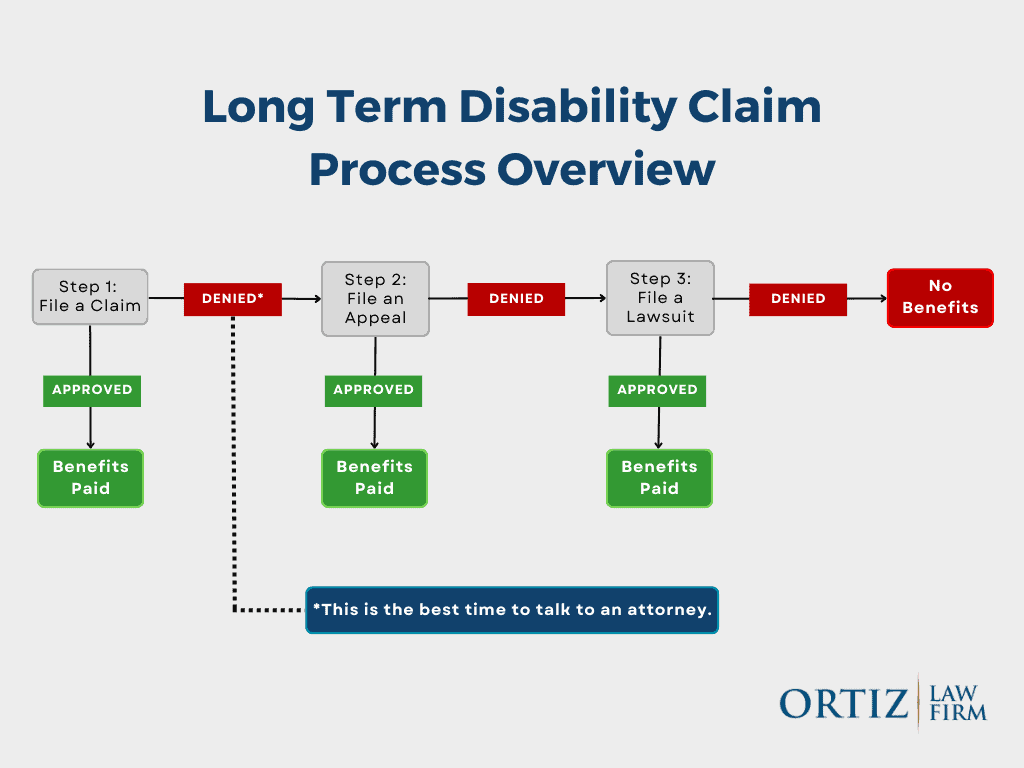
A denial does not mean the end of your claim—but deadlines matter.
After receiving a denial letter, you should:
- Carefully review the stated reasons for denial
- Request a complete copy of your claim file
- Obtain the full disability policy
- Calendar all appeal deadlines
- Begin gathering updated medical evidence
Missteps at this stage can permanently limit your ability to challenge the denial.
How ERISA Affects Prudential Disability Claims
Most Prudential group disability policies are governed by the Employee Retirement Income Security Act (ERISA). ERISA imposes strict deadlines and procedures that must be followed before a lawsuit can be filed.
Under ERISA:
- Claimants usually have 180 days to file an appeal
- All evidence must be submitted during the appeal stage
- Courts generally review only the administrative record
Because evidence cannot usually be added later, the appeal process is often the most critical phase of the claim.
Regulatory Timelines for ERISA Disability Claim Decisions
Federal law sets out clear deadlines that all ERISA long-term disability insurers must follow once a claim is submitted. Typically, the insurer must issue a decision within 45 days of receiving your initial claim. However, the process can be extended in certain situations:
- If the insurer notifies you in writing before the initial 45 days are up, citing “circumstances beyond their control,” they may take an additional 30 days (for a total of 75 days).
- If more time is still needed, and they provide another written notice before the 75-day mark, a second extension of 30 days is allowed—bringing the maximum decision period to 105 days from the date your claim was filed.
Throughout this process, each extension requires prompt notification and legitimate justification from the insurer. Being aware of these deadlines can help you monitor your claim’s progress and respond proactively if there are unnecessary delays.
What If ERISA Does Not Apply?
Individual disability policies, as well as policies provided by certain government or church employers, may not be governed by ERISA. These claims are typically controlled by state law and may allow litigation without exhausting administrative appeals.
Determining whether ERISA applies is a key early step in evaluating your options.
How to Appeal a Prudential Long-Term Disability Denial
A strong appeal directly addresses Prudential’s stated reasons for denial and fills gaps in the claim file. Successful appeals often include:
- Detailed medical opinions from treating providers
- Clarification of functional limitations
- Vocational evidence addressing job demands
- Written statements explaining symptom impact
It’s critical to go beyond simply stating that you cannot work. Instead, provide thorough documentation that clearly explains how your condition prevents you from performing the specific duties of your job. Obtain a copy of your detailed job description from your employer and use it as a reference point. Tie your medical evidence to these job requirements, showing exactly where your limitations interfere.
Support your claim further by including statements from your employer, coworkers, or even vocational experts. These third-party perspectives can validate your limitations and offer additional credibility to your appeal.
If ERISA applies, this may be your only opportunity to submit additional evidence.
Additional Evidence That Can Strengthen Your Appeal
Depending on the denial reason, helpful evidence may include:
- Updated medical examinations or specialist evaluations
- Narrative reports from treating physicians
- Vocational expert opinions
- Statements from family members or coworkers
Coordinating this evidence effectively is often key to overturning a denial.
Filing a Lawsuit Against Prudential
If administrative appeals are exhausted, you may be able to file a lawsuit in federal court. Prudential’s exhaustion letters typically state that no further internal review will occur and outline litigation deadlines.
Federal courts generally do not consider new evidence, which is why careful appeal preparation is essential.
How an Attorney Can Help with a Prudential LTD Denial
An experienced disability attorney can:
- Identify weaknesses in Prudential’s reasoning
- Ensure appeal deadlines are met
- Develop medical and vocational evidence
- Handle communications with the insurer
- Prepare the claim for potential litigation
Legal representation helps level the playing field against a well-resourced insurer.
About the Ortiz Law Firm
The Ortiz Law Firm is a national disability law firm based in Pensacola, Florida. Led by disability attorney Nick Ortiz, the firm represents individuals nationwide in long-term disability appeals and lawsuits. We operate under a No Recovery, Zero Fee Guarantee. You pay no legal fees unless benefits are recovered.
Prudential Disability Case Results
We have successfully resolved many Prudential LTD claims, including:
- Benefits approved despite reliance on self-reported symptoms
- Claims overturned despite reliance on peer reviews
- Mental health and chronic condition claims reinstated
Names are withheld to protect client privacy.
Get a Free Case Review
Don’t let Prudential’s denial prevent you from receiving your rightful benefits. Take action today to protect your financial stability and secure the compensation you deserve. Call (888) 321-8131 or request a free case review today.

I found myself in need of an attorney to help me weave my way through the appeal process of a long term disability denial of coverage at the 2 year mark. Ran into the wall known as Prudential. I vetted several law groups and settled with the Ortiz Law Firm as they have a proven track record and seemed to care about a positive outcome (not just about winning for their fee, but a genuine care for their client)!
