
Table of Contents[Hide][Show]
Living with Graves’ disease can feel like a contradiction. On the outside, you might look perfectly healthy, but on the inside, you’re battling a racing heart, profound fatigue, and an anxiety you can’t always explain. This invisible struggle affects your work, your family, and your ability to simply feel like yourself, which often leads to a critical question: is Graves’ disease considered a disability?
The answer isn’t a simple yes or no. In the eyes of the law, a medical diagnosis alone doesn’t automatically qualify as a disability. The crucial factor is how your specific Graves’ disease symptoms—from brain fog to tremors—substantially limit your ability to perform daily life activities.
Those who cannot work due to Graves’ disease may qualify for Long-Term Disability (LTD) benefits and Social Security Disability Insurance benefits. Your experience is valid, and those “invisible” symptoms have real legal relevance. This guide will walk you through how to understand and document the impact of your condition to better support your claim.
What Is Graves’ Disease?
Imagine your body has an engine, and the thyroid gland is the gas pedal that controls its speed. With Graves’ disease, that gas pedal is essentially stuck to the floor. Your body is forced to run at full throttle all day, every day. This state of an overactive thyroid is known as hyperthyroidism, and it’s the source of many Graves’ disease symptoms, from a racing heart and constant anxiety to profound exhaustion. It’s not just feeling “energetic”—it’s feeling overstimulated and worn out at the same time.
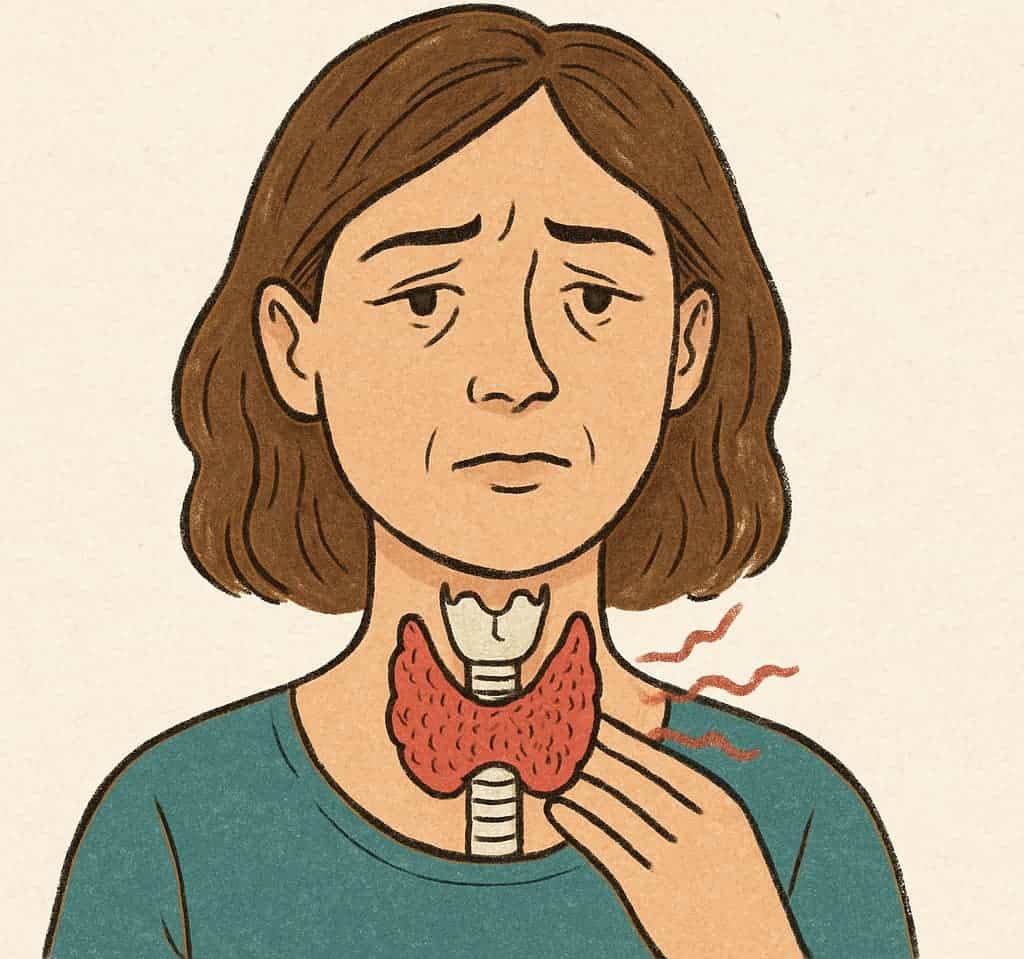
Graves’ disease is one of several autoimmune disorders, which occur when the body’s defense system gets confused. Think of your immune system as a security guard that normally fights off germs. In this case, the guard mistakenly identifies your own thyroid gland as a threat. Instead of protecting it, the immune system sends faulty signals that push the thyroid to work overtime, producing far too much hormone.
The result is a constant, invisible battle inside your own body. While you might look perfectly healthy to others, you’re dealing with a system that’s burning itself out. This internal chaos makes living with Graves’ challenging and brings up how these symptoms translate to the world of work and legal protections.
Causes, Incidences, and Risk Factors
Researchers don’t know exactly why some people get autoimmune diseases like Graves’ disease. It’s believed that these conditions result from a mix of genes and an outside trigger, such as a virus.
In Graves’ disease, your immune system produces an antibody called thyroid-stimulating immunoglobulin (TSI) that binds to your thyroid cells. TSI works similarly to thyroid-stimulating hormone (TSH), a hormone created in your pituitary gland that directs your thyroid on how much hormone to produce. TSI prompts your thyroid to overproduce thyroid hormone.
The thyroid gland is an important organ of the endocrine system. It is located in the front of the neck, just below the voice box. This gland releases the hormones that control body metabolism. Controlling metabolism is critical for regulating mood, weight, and energy levels. Thyroid hormones also affect your nervous system function, brain development, and body temperature.
You are at a higher risk of developing Graves’ disease if:
- You have a family history of Graves’ disease or Hashimoto’s disease.
- You have other autoimmune disorders like vitiligo, autoimmune gastritis, type 1 diabetes, and rheumatoid arthritis.
- You use nicotine products.
Symptoms
Many of the symptoms of Graves’ disease are separate conditions with limitations that compound your inability to work. Your symptoms should be documented in your medical information to be considered during your disability evaluation. Symptoms of Graves’ disease include:
- Anxiety
- Bulging eyes (Graves’ ophthalmopathy)
- Double vision
- Eyeballs that stick out (exophthalmos)
- Eye irritation and tearing
- Fatigue
- Frequent bowel movements
- Enlargement of the thyroid gland (goiter)
- Heat intolerance
- Increased appetite
- Increased sweating
- Insomnia
- Muscle weakness
- Nervousness
- Rapid or irregular heartbeat (palpitations or arrhythmia)
- Restlessness and difficulty sleeping
- Shortness of breath with exertion
- Tremor
- Weight loss (rarely, weight gain)
Eye problems related to Graves’ disease often get better with treatment for thyroid activity, whether through medications, radiation, or surgery. However, iodine treatments could sometimes worsen eye problems. Smoking tends to exacerbate eye issues, even post-treatment for hyperthyroidism.
In some cases, prednisone, a steroid that suppresses the immune system, can help reduce eye irritation and swelling. You might need to tape your eyes shut at night to prevent dryness. Wearing sunglasses and using eye drops could also help alleviate eye irritation. In rare instances, surgery or radiation therapy might be necessary to restore the eyes to their normal position.
Signs and Evidentiary Tests
First, your doctor will conduct a physical examination. Examination by a doctor may provide evidence of an increased heart rate or that the thyroid gland is enlarged (goiter). Other tests used to determine if a patient has Graves’ disease include:
- Blood tests can measure your thyroid hormone levels and check for TSI.
- A thyroid scan, often done alongside the radioactive iodine uptake test, reveals how and where iodine is spread in your thyroid. In Graves’ disease, iodine appears all over the gland. For other causes of hyperthyroidism, like nodules (small lumps in the gland), iodine differs in appearance.
- Radioactive iodine uptake tests gauge how much iodine your thyroid absorbs from your bloodstream to produce hormones. If your thyroid absorbs high iodine levels, you might have Graves’ disease.
- The Doppler blood flow measurement, also known as Doppler ultrasound, uses sound waves to spot increased blood flow in your thyroid caused by Graves’ disease. Your doctor might recommend this test instead of radioactive iodine uptake, especially during pregnancy or breastfeeding.
Submit the results of any such test results in support of your disability claim.
Treatment
Treatment for Graves’ disease usually focuses on controlling the overactivity of the thyroid gland. Beta-blockers such as propranolol are often used to treat symptoms of rapid heartbeat, sweating, and anxiety until the hyperthyroidism is controlled with one or more of the following:
- Antithyroid medications.
- Radioactive iodine therapy.
- Thyroid surgery.
These medications can help with symptoms temporarily, but they don’t offer a permanent cure for Graves’ disease. It could take weeks or months for your thyroid hormone levels to return to normal. On average, treatment typically lasts around 1–2 years, but in some cases, it can continue for many years.
Antithyroid medications can also have serious side effects:
- Allergic reactions, like rashes and itching.
- A drop in white blood cell count makes you more prone to infections.
- In rare cases, liver failure can occur with antithyroid medicines.
Complications
Complications of Graves’ disease may include thyroid crisis (thyrotoxic storm), which is a severe worsening of overactive thyroid gland symptoms, and an increased risk of brittle bones (osteoporosis).
If you have radiation and surgery, you will need to take replacement thyroid hormones for the rest of your life because these treatments destroy or remove the gland. Without getting the correct dose of thyroid hormone replacement, hypothyroidism can lead to:
- Depression.
- Sluggishness.
- Weight gain.
Other complications from surgery could include additional medical conditions and new symptoms:
- Hoarseness from damage to the nerve leading to the voice box.
- Low calcium levels from damage to the parathyroid glands (located near the thyroid gland).
- Scarring of the neck.
- Eye problems (called Graves’ ophthalmopathy or exophthalmos).
If Graves’ disease isn’t treated, it can cause heart rhythm problems and changes in how the heart muscles work, and the heart may struggle to pump enough blood throughout the body. Heart-related complications, including:
- Rapid heart rate.
- Congestive heart failure (especially in the elderly).
- Atrial fibrillation.
Complications related to thyroid hormone replacement, for example:
- If too little hormone is given, fatigue, weight gain, high cholesterol, depression, physical sluggishness, and other symptoms of hypothyroidism can occur.
- If too much hormone is given, symptoms of hyperthyroidism will return.
Is Graves’ Disease Considered a Disability?
It’s easy to assume the diagnosis itself is your ticket to being legally considered disabled. This is a critical misunderstanding. In the eyes of the law—whether for workplace rights or financial benefits—simply having Graves’ disease is not enough. The focus isn’t on the label but on its real-world consequences.
This is what doctors and lawyers call “functional limitations.” Imagine two people, both with Graves’ disease. One might respond well to medication and have only mild symptoms that don’t interfere with their desk job. Another person, however, could face debilitating fatigue, severe anxiety, and uncontrollable tremors that make it impossible to concentrate or even hold a pen. Though they share a diagnosis, only the second person has limitations that substantially affect their ability to function.
To build a case for support, you must shift your focus from “I have Graves’ disease” to “Because of my Graves’ symptoms, I am limited in my ability to think clearly, interact with others, or get a full night’s sleep.” This focus on how the disease affects you is the foundation for everything that comes next, starting with getting help at your job.
Social Security Disability for Graves’ Disease
The Social Security Administration (SSA) does not have a specific listing for Graves’ disease, but it is possible to receive benefits for this disease if the SSA determines that your symptoms and limitations prevent you from performing Substantial Gainful Activity (SGA) for 12 months or longer. Your symptoms and limitations must be clearly stated in the medical evidence to qualify for benefits.
How the SSA Evaluates Thyroid Disorders for Disability
While Graves’ disease doesn’t have its own dedicated category under Social Security’s listings, medical conditions involving the thyroid are generally assessed under SSA Listing 9.00 (Endocrine Disorders). The key element isn’t just your diagnosis—it’s whether your thyroid disorder causes other health issues or limitations that prevent you from working for at least a year.
SSA focuses on how your thyroid condition impacts different body systems. For example, you may have complications affecting your heart, muscles, eyes, or mental health. The evaluation looks at the severity, persistence, and effects of your symptoms—not simply test results or the presence of a specific diagnosis.
To support your claim, medical documentation can include:
- Comprehensive treatment records detailing your condition and response to therapy
- Physical examinations and specialist reports
- Laboratory findings (such as thyroid hormone levels, thyroid antibody levels)
- Imaging studies (like thyroid ultrasound or scans)
- Functional assessments (for muscle weakness, reflexes, or eye involvement)
While blood tests and imaging are important, it’s the medical evidence that shows how your thyroid disorder affects your daily functioning and limits what you can do that will carry the most weight in your disability application. The SSA may also consider results from further tests such as electromyography (for muscle disorders), deep tendon reflex exams, or tests that measure thyroid hormone activity (including TSH, T4, T3, and related markers).
To summarize: SSA determines if a thyroid disorder qualifies as a disability by evaluating medical records, functional limitations, and the disorder’s impact on your ability to perform work activities. A combination of test results and documented symptoms is essential for your claim to succeed.
Understanding the SSA’s Listing of Impairments
The Social Security Administration’s Listing of Impairments serves as a comprehensive guide that details a wide range of disabling medical conditions and the exact requirements needed for each to qualify for disability benefits. Think of it as the SSA’s playbook for evaluating disabilities.
Although Graves’ disease itself doesn’t appear as a separate entry in the Listings, that doesn’t rule out eligibility. If your thyroid disorder produces symptoms and limitations that are as severe as those described under a listed impairment—such as certain cardiovascular or mental health conditions—you may still be able to qualify by showing that your condition is medically equivalent to a listed disorder.
This approach, known as “equivalency,” allows people with Graves’ disease or related thyroid disorders to demonstrate that their challenges are just as disabling as officially listed medical conditions. Demonstrating equivalency is complex, but with strong documentation and clear evidence of your limitations, you improve your chances of receiving Social Security benefits for your thyroid condition.
If your complications include mental health or cardiac problems, these medical conditions will be evaluated under the mental disorders listing and cardiovascular listing, respectively:
A residual functional capacity (RFC) evaluation can help to document the effects of thyroid gland disorders and any other medical conditions you suffer from. Ask your doctor(s) to complete an RFC form and submit the completed form to the SSA. We offer physical and mental RFC forms on our website that you can download for free.
Long-Term Disability for Graves’ Disease
Long-term disability (LTD) claims are evaluated using the definition of disability that is defined in the disability insurance policy. The definition of disability varies between policies. In some cases, the definition of disability changes after a certain period of time (usually 24 months). You need to determine what the definition of disability is in your policy so that you know what medical information is needed to support your claim that Graves’ disease and your symptoms and limitations prevent you from working.
The residual functional capacity (RFC) form can also be used as evidence in an LTD claim. The insurance company will still review your medical records and non-medical information while trying to decide on your ability to work, but a thoroughly completed RFC form can make a significant impact on the outcome of your case. Unlike most medical records, an RFC form will clearly state the severity of your impairments.
Working with a Disability Attorney
Working with a disability attorney can improve the chances that you will receive the benefits you deserve from the SSA or the LTD insurance company for your Graves’ disease. A claim denial isn’t the end; many applicants face this hurdle on their first attempt. Remember, you have the right to appeal and provide additional medical evidence to support your claim.
Often, professional expertise is the key to unlocking approval for disability benefits. Consulting an attorney who is experienced in Social Security Disability Law or long-term disability claims ensures you have an advocate who understands the nuances of these cases and can help you present the strongest possible evidence.
Navigating the intricacies of the process might seem intimidating, but having an experienced disability attorney to guide you through the process will help. Most importantly, we only get paid if we are successful in helping you recover your benefits. You can seek help for your claim without worrying about upfront costs or unexpected bills.
Not sure where to start? Reach out as soon as possible so we can answer your questions and help you take the next step. The Ortiz Law Firm has successfully represented people in disability claims nationwide. If you are ready to take the next step and get help with your claim, call us at (888) 321-8131. We will evaluate your case and discuss how we can help you through the appeal process.
Sources
- Mayo Clinic. “Graves’ Disease.” Retrieved from: (https://www.mayoclinic.org/diseases-conditions/graves-disease/symptoms-causes/syc-20356240) Accessed on February 23, 2024
- National Institute of Diabetes and Digestive and Kidney Diseases. “Graves’ Disease.” Retrieved from: (https://www.niddk.nih.gov/health-information/endocrine-diseases/graves-disease) Accessed on February 23, 2024
